Category: Sustainability

  • Can the world afford $5-7 trillion a year for green goals in 2025?

    Key takeaways
    • ESG frameworks have become essential for managing systemic risks, with the global ESG finance market reaching $6.3 trillion in 2024 and ESG investing market projected to grow to $167 trillion by 2034 (precedence research)
    • Trump’s 2025 regulatory rollbacks have created policy fragmentation, yet Europe’s leadership demonstrates that ambitious ESG frameworks drive both compliance and competitive advantage.
    • The $5-7 trillion annual investment required for green goals is not just affordable but economically imperative, climate inaction costs far more than sustainable transformation.


    Climate disasters already cost the global economy $300 billion annually, a figure projected to double  by 2030 without decisive intervention ( UNDRR )Meanwhile ,the global ESG finance market has reached $6.3 trillion in 2024 (Business Research Company), the broader ESG investing market ,which includes assets with ESG criteria, was valued at nearly $30 trillion in 2024 and is projected to surpass $167 trillion by 2034 (Precedence Research).These numbers tell a story: Environmental, Social and Governance frameworks are no longer peripheral considerations but central to economic stability.
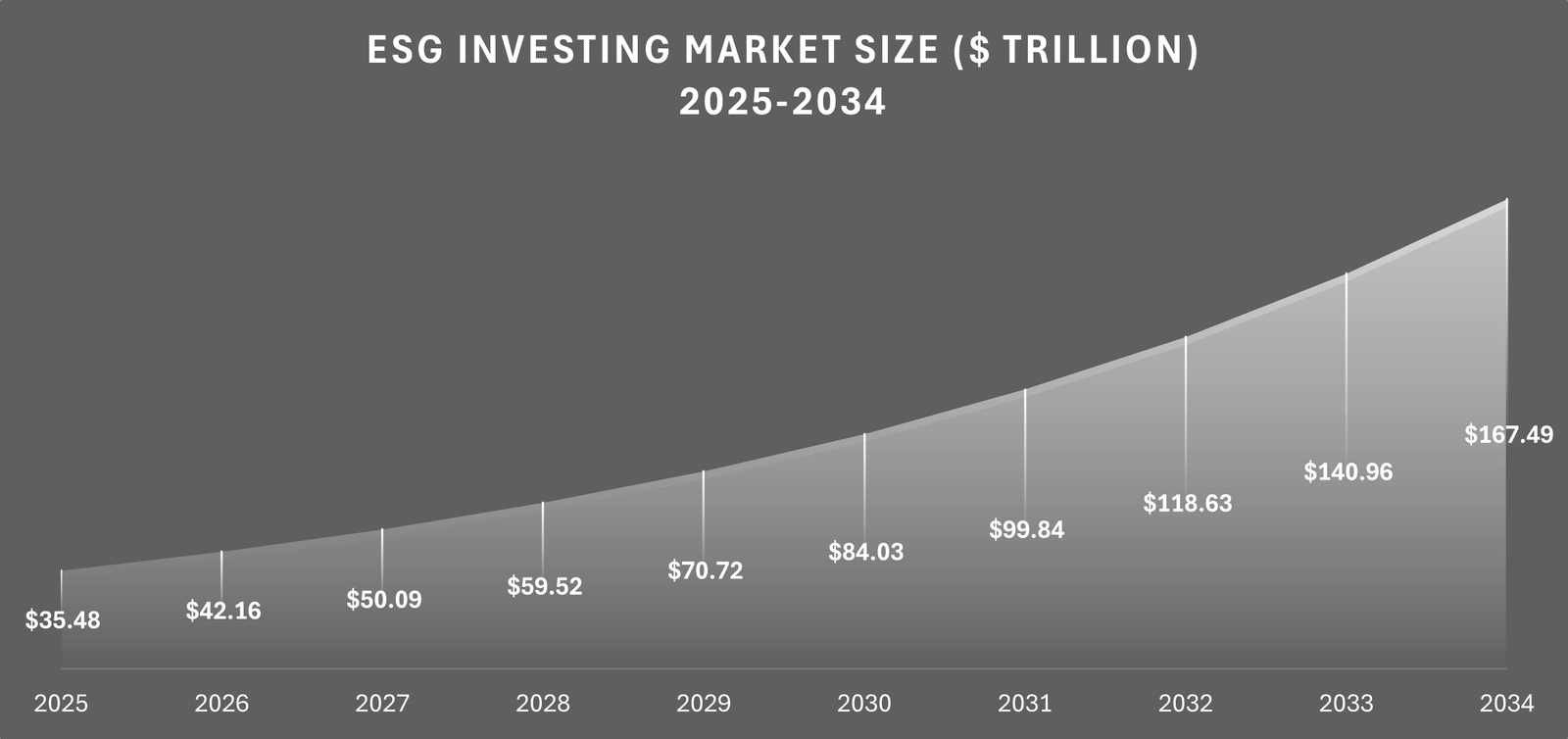
    Figure: Projected Global ESG Investing Market Size (Source: Precedence Research )

    With the Trump administration’s aggressive rollback of climate policies and ongoing debates over financing green transitions, a critical question emerges: Can the world afford to invest $5-7 trillion annually in sustainable goals, or can it afford or not to?

    The power of ESG integration

    ESG frameworks deliver tangible benefits across business performance and risk management. Companies adopting comprehensive ESG practices report upto 20% reduction in energy costs, improved access to capital through sustainability, linked loans and enhanced resilience against regulatory risks. Around 90% of S&P 500 companies now publish ESG reports, reflecting widespread recognition of these frameworks’ strategic value (Key ESG)

    The ESG reporting software market exemplifies this momentum, growing from $1.16 billion in 2024 to a projected $1.39 billion in 2025, a 19.6% increase driven by regulatory requirements and investor demand (Business Research Company). This growth reflects genuine value creation through improved decision making and risk management.

    The pre-Trump ESG foundation

    Before current policy reversals, the United States had begun aligning federal initiatives with global climate commitments. The Paris Agreement provided coordination frameworks, while federal clean energy incentives catalyzed private investment in renewable technologies. Green bond issuance  grew consistently, channeling billions into renewable energy and sustainable infrastructure projects.

    This era demonstrated ESG’s role as both ethical imperative and market opportunity, proving that government leadership could accelerate market-driven sustainability transitions (Financier Worldwide,2025, Columbia Law Climate Blog,2025).

    Europe’s ESG leadership: Setting global standards

    Europe exemplifies how ambitious regulatory frameworks drive both compliance and competitive advantage. The Corporate Sustainability Reporting Directive (CSDR) mandates ESG disclosures for over 50,000 companies, creating unprecedented transparency. This regulatory clarity has catalyzed remarkable investment: European low carbon energy investments reached around $2 trillion in 2024, an 11% year on year increase (European Commission,2025).

    European banks integrate climate risks assessments into lending practices, charging higher interest rates to carbon intensive firms while offering preferential terms for sustainable projects. Green bond issuance has reached record levels, supporting the infrastructure projects that enhance both environmental performance and economic competitiveness.

    The European approach demonstrates that regulatory rigor and economic growth are complementary rather than competitive objectives (Climate Bonds Initiative,2025, European Banking Authority,2025).

    Trump’s 2025 Agenda: Fragmentation and uncertainty

    The current administration has implemented sweeping ESG policy reversals, creating significant regulatory fragmentation. Key actions include withdrawing from the Paris Agreement, rolling back federal clean energy incentives, and weakening SEC climate risk disclosure rules.

    These shifts generated immediate market impacts, with ESG funds experiencing approximately $8.6 billion in outflows during early 2025 (Edie Net).

    Figure: ESG-Mandated Assets as Share of Total U.S. Managed Assets (2012-2025) (Source: US SIF Foundation and Deloitte Financial Services,2025 / Via Deloitte Insights )

    However, this federal retreat hasn’t eliminated ESG momentum entirely. States like California and New York continue to enforce stringent climate regulations, including emissions caps and mandatory sustainability disclosures, resulting in a complex patchwork of requirements that companies must navigate. This patchwork of rules makes it more expensive and complicated for companies to follow regulations, but it also shows that ESG ideas remain strong and important at the state and market levels (Financier Worldwide,2025).

    Navigating the fragmented landscape

    Current regulatory fragmentation presents both challenges and opportunities. Multinational corporations face increased compliance costs across differing jurisdictions, yet this rewards companies adopting comprehensive ESG frameworks capable of meeting the highest standards.

    Private capital continues flowing toward sustainable investments despite federal uncertainty with institutional investors significantly increasing their allocations to renewable energy, reflecting strong momentum in 2025. Recent reports indicate that many investors plan to boost their renewable energy investments by 10% to 20% in the coming years, driven by growing demand for clean energy and supportive policies, demonstrating market fundamentals drive decisions more than political rhetoric (KPMG Energy Transition Outlook 2025).

    The ESG rating services market grew from $11 billion in 2024 to $12 billion in 2025, evidence of sustained demand for sustainability focused transparency (The Business Research Company).

    Financing the green transition

    The question of whether the world can afford to invest $5-7 trillion annually in green goals misses the point. Climate disasters already cause huge economic losses, and these damages are expected to double by 2030 if no action is taken. The real choice is between spending money now to build resilience or paying much more later to manage crisis.

    The green bond market shows that the capital is available for sustainable projects. So far, by the end of 2024, the global cumulative issuance of green bonds reached approximately $3 trillion in 2024 alone, with $670 billion issued in green bonds, underscoring the continued expansion of sustainable finance.

    Table: ESG Investing Market Size (Source: Precedence Research)

    At the same time, private companies are innovating to lower the costs of clean technologies while making them more effective, making green investments increasingly attractive financial decisions (Climate Bonds Initiative,2025, International Energy Agency,2025).

    An investment in resilience

    The substantial annual investment requirement represents not a cost but an opportunity to create stronger and more resilient economies. The ESG investing market is expected to reach $131 trillion by 2032, increasing at nearly 17% CAGR from 2024 to 20232.This shows that investors have strong and lasting confidence in sustainable business practices (Globe Newswire).

    At Axial Consulting, we recognize this transformation is both inevitable and essential. Our climate cannot afford continued degradation, our economies cannot sustain mounting disaster costs, and our societies cannot ignore growing governance failures. ESG frameworks provide practical tools for addressing these interconnected challenges while creating stakeholder value. The world can afford this investment because it cannot afford the alternative. Climate disasters, resource scarcity, and social instability impose far greater costs than proactive sustainability measures. Europe’s leadership demonstrates that ambitious ESG frameworks drive innovation and competitiveness.

    Even amid U.S. federal policy reversals, state governments, private investors and corporations continue advancing sustainable practices because they recognize the fundamental economic logic underlying ESG integration.

    The question is whether we can afford to delay this essential investment any longer. The time for half measures has passed. The future demands bold action, guided by the comprehensive frameworks that ESG principles provide.

    Sources 
    • Precedence Research.
    • Business Research Company. ESG Finance and Reporting Software Market Outlook 2024-2025.
    • UNDRR( United Nations Office For  Disaster Risk Reduction). Global Climate Risk Report.
    • Key ESG. S&P 500 reporting trends. 
    • Financier Worldwide. ESG Policy Rollbacks and Market Impacts 
    • Columbia Law School Climate Law Blog. ESG Policy and Regulatory Frameworks(2025).
    • European Commission
    • Climate Bonds Initiative 
    • KPMG. Energy Transitions Outlook 2025.
    • The Business Research Company. ESG Rating and Services Market Growth 
    • International Energy Agency. Clean Energy Investments Trends.
    • Globe Newswire. Global Energy Market Forecasts to 2032.

    Authors

  • Sustainability vs ESG: What’s the Difference and Why Do They Matter

    In today’s interconnected world, sustainability and Environmental, Social, and Governance (ESG) have become crucial frameworks in both business and investment landscapes. While they share overlapping goals – namely fostering environmental stewardship, social responsibility, and sound governance – they are distinct in their focus, application, and implications. Understanding the difference between sustainability and ESG is essential for organizations and investors alike, as both play pivotal roles in resource management, lifecycle assessment, ecosystem balance, and enhancing economic value over the long term.

    Defining Sustainability

    Sustainability refers to the broad concept of meeting present needs without compromising the ability of future generations to meet their own. It encompasses environmental, social, and economic dimensions, focusing on maintaining ecosystem balance, promoting social equity, and ensuring economic viability. Central to sustainability is resource management, which involves using natural resources efficiently to reduce waste, prevent environmental degradation, and maintain the health of ecosystems.

    A key tool in sustainability is lifecycle assessment (LCA), which evaluates the environmental impact of a product, service, or process throughout its entire lifecycle – from raw material extraction and production to usage and disposal. LCA helps organizations identify opportunities to minimize their ecological footprint, optimize resource use, and improve sustainability performance.

    ESG: A Framework for Investors

    Environmental Social and Governance (ESG), on the other hand, is a specific framework used primarily in the financial and investment sectors to assess the sustainability and ethical impact of companies and their operations. ESG factors provide a structured way to evaluate non-financial risks and opportunities, guiding investors in making decisions that align with long-term value creation.

    1. Environmental: This pillar evaluates a company’s impact on the environment, including its carbon footprint, waste management, energy efficiency, and resource management practices.
    2. Social: This focuses on how a company manages relationships with employees, suppliers, customers, and communities, emphasizing issues such as labor standards, diversity, and human rights.
    3. Governance: Governance involves assessing corporate leadership, board composition, transparency, ethics, and shareholder rights.

    Unlike sustainability, which is broader in scope, ESG focuses specifically on measurable criteria that can influence investment decisions and corporate reputation. It provides investors with data-driven insights into how well a company manages risks related to environmental sustainability, social responsibility, and governance practices.

    Key Differences Between Sustainability and ESG

    1. Scope and Focus
      Sustainability is a holistic concept encompassing environmental, social, and economic dimensions aimed at achieving ecosystem balance and ensuring long-term societal well-being. ESG, meanwhile, serves as a tool for assessing and reporting on a company’s performance in areas that affect its financial value and risk profile.
    2. Application
      Sustainability is applied broadly across industries, governments, and communities to drive systemic change and ensure resource management aligns with global sustainability goals. ESG is primarily used by investors, financial institutions, and businesses to evaluate non-financial risks and opportunities related to environmental and social issues.
    3. Metrics and Measurement

    Sustainability relies on qualitative and quantitative metrics, such as lifecycle assessments, carbon emissions, and social impact evaluations. ESG, however, uses standardized metrics like ESG scores and ratings provided by agencies such as IFRS, GRI, and CDP to evaluate a company’s performance.

    Why Sustainability Matters

    Sustainability is critical to ensuring the long-term health of the planet, society, and the global economy. Effective resource management is essential for conserving finite resources such as water, energy, and raw materials. By adopting sustainable practices, businesses can reduce their environmental impact, maintain ecosystem balance, and enhance social equity.

    Moreover, sustainability contributes to economic value by fostering innovation, reducing costs through efficiency improvements, and enhancing brand reputation. Companies that prioritize sustainability are better positioned to meet evolving regulatory requirements, address stakeholder expectations, and navigate global challenges such as climate change and resource scarcity.

    Why ESG Matters

    ESG has become a vital tool for investors seeking to align their portfolios with sustainable and ethical values while managing risk and maximizing economic value. Companies with strong ESG performance often demonstrate superior risk management, operational efficiency, and resilience to market disruptions.

    Studies have shown that companies with high ESG ratings tend to outperform their peers in the long term, delivering higher returns and reduced volatility. ESG factors also provide insights into how well a company is prepared to address future challenges such as climate change, social inequality, and regulatory changes.

    Furthermore, ESG can drive positive social and environmental outcomes by encouraging companies to adopt responsible business practices, improve resource management, and enhance transparency and accountability.

    The Intersection of Sustainability and ESG

    While sustainability and ESG are distinct, they are deeply interconnected. ESG provides a practical framework for measuring and reporting on sustainability efforts, translating qualitative goals into quantifiable metrics that investors and stakeholders can use. Sustainability, in turn, informs ESG criteria by setting the broader vision and goals for environmental protection, social equity, and governance integrity. Together, sustainability and ESG represent powerful tools for driving positive change in today’s rapidly evolving global landscape.

    Understanding the growing importance of sustainability and ESG, Axial Consulting offers specialized services in sustainability reporting and ESG ratings services. These services empower organizations to communicate their environmental, social, and governance commitments effectively while driving accountability and long-term impact.


  • The History of Environmental, Social, and Governance (ESG)

    Environmental, Social, and Governance (ESG) has evolved into a central framework for evaluating corporate responsibility and sustainable investment. What began as ethical investing has transformed into a comprehensive strategy for addressing environmental sustainability, social equity, and governance integrity. This article will delve into the history of ESG, exploring its origins, key milestones, and the factors that propelled it into the financial mainstream.

    The Apartheid and Early Ethical Investing

    In the 1970s, global condemnation of South Africa’s apartheid regime led to one of the most famous cases of selective disinvestment based on ethical principles. Reverend Leon Sullivan, a General Motors board member, developed the Sullivan Principles in 1977. This code of conduct outlined how U.S. companies would ethically engage in business with South Africa. The widespread adoption of these principles by U.S. firms led to significant disinvestment from South Africa, exerting economic pressure that contributed to the dismantling of apartheid. This example demonstrated the power of collective investor action in influencing social outcomes – a foundational concept for ESG investing.

    During the same era, conflicting ideologies emerged regarding corporate responsibility. Milton Friedman, a renowned economist, argued in his 1970 essay that a corporation’s sole responsibility was to maximize profits for shareholders. His Friedman Doctrine posited that social responsibility was a distraction from the primary goal of financial performance. This view dominated much of 20th-century economic thought, emphasizing short-term gains over broader societal concerns.

    However, Stakeholder Theory, advanced by scholars such as R. Edward Freeman later came to challenge this narrative. It argued that corporations should balance the interests of all stakeholders – employees, customers, communities, and shareholders alike. By the late 20th century, the concept of social capital emerged, particularly through James S. Coleman’s 1988 article “Social Capital in the Creation of Human Capital,” which emphasized the value of social networks and trust in creating economic value. This shift in thinking laid the groundwork for ESG’s emphasis on long-term value creation through sustainable and responsible practices.

    The Triple Bottom Line and Social Auditing

    In the 1980s and 1990s, new frameworks for measuring corporate success beyond financial performance gained traction. Freer Spreckley, in his 1981 work Social Audit: A Management Tool for Co-operative Working, introduced the concept of evaluating organizations on financial viability, social wealth creation, governance, and environmental responsibility. This approach became known as social auditing.

    In 1998, John Elkington coined the term Triple Bottom Line in his book Cannibals with Forks: The Triple Bottom Line of 21st Century Business. Elkington argued that businesses should measure success not only by financial profit but also by their impact on people (social) and the planet (environment). These ideas further solidified the integration of ESG factors into mainstream business practices.

    Establishing Compliance                              

    In 2005, the United Nations Environment Programme Finance Initiative (UNEP FI) commissioned a report by the international law firm Freshfields Bruckhaus Deringer to examine how the law applies to investors regarding ESG issues. The report concluded that not only is it permissible for investment firms to incorporate ESG factors into their analysis, but doing so could also be considered a fundamental aspect of their fiduciary duty.

    A turning point for ESG came with the launch of the UN Principles for Responsible Investment (UN PRI) in 2006. This initiative, backed by the United Nations, established six principles encouraging institutional investors to incorporate ESG considerations into their decision-making processes.

    In time, major financial institutions began to recognize the importance of ESG. In 2011, Alex Edmans published a study showing that companies listed in the “100 Best Companies to Work For” outperformed their peers in stock returns, proving the financial value of strong ESG performance.

    ESG Today

    During the COVID-19 pandemic, major asset managers like BlackRock and Fidelity pressured pharmaceutical companies to collaborate in vaccine development, underscoring the growing influence of ESG principles in global crises. In 2021, The Task Force on Climate-related Financial Disclosures (TCFD) and regulations such as the EU Sustainable Finance Disclosure Regulation (SFDR) further institutionalized ESG compliance.

    Despite its rapid adoption, ESG has faced backlash. In 2023, conservative networks launched campaigns to dismantle ESG, particularly targeting climate-friendly investments. However, the momentum for ESG remains strong, with many in the investment industry viewing its integration as inevitable.

    The evolution of Environmental Social and Governance (ESG) investing reflects a profound shift in how businesses and investors approach value creation. From the ethical disinvestment of the 1970s to the formalization of the UN PRI, ESG has become a critical framework for managing risks and seizing opportunities in the modern economy.

    Acknowledging the growing significance of ESG compliance, Axial Consulting has designed a robust ESG Rating Framework to evaluate corporate ESG performance and pinpoint key risk areas. This framework aims to help create value for investors and stakeholders, fostering informed decision-making and long-term sustainability.

  • Five Ways That ESG Creates Value

    Environmental, Social, and Governance (ESG) criteria have emerged as a cornerstone of modern business strategy. Companies that integrate ESG principles into their operations find themselves better positioned to succeed in an era of heightened stakeholder expectations and regulatory scrutiny. This article explores five key ways in which ESG creates value for companies and their stakeholders.

    1. Enhancing Reputation and Brand Equity

    One of the most visible ways ESG creates value is through its positive impact on reputation and brand equity. Consumers, investors, and employees increasingly prefer businesses that demonstrate a commitment to sustainability, social responsibility, and ethical governance. Companies that prioritize ESG not only gain public trust but also differentiate themselves in competitive markets.

    For example, a strong environmental commitment, such as adopting renewable energy sources or reducing waste, resonates with eco-conscious consumers. Similarly, robust social initiatives, like investing in community development or ensuring workplace diversity, enhance a company’s image as a responsible corporate citizen.

    On the governance front, transparency in decision-making and adherence to corporate governance best practices build credibility. By publishing comprehensive ESG reports and demonstrating accountability, companies can attract socially responsible investors and foster long-term loyalty among stakeholders.

    2. Attracting and Retaining Talent

    The modern workforce values purpose and alignment with personal ethics. Employees, especially younger generations, prefer working for organizations that prioritize ESG principles. This trend highlights how ESG creates value in the form of improved employee engagement, retention, and productivity.

    Social initiatives such as promoting diversity, equity, and inclusion (DEI) or supporting mental health programs are particularly significant. Employees want to feel that their work contributes to a larger mission, and organizations that integrate ESG into their operations can create a more inspiring workplace culture.

    Moreover, companies with strong ESG commitments often benefit from attracting top-tier talent. For instance, a technology company emphasizing green innovation or a manufacturing firm implementing ethical labor practices can position itself as an employer of choice. Such efforts reduce recruitment costs and enhance overall organizational performance.

    3. Improving Operational Efficiency and Achieving Cost Savings

    A well-executed ESG strategy can significantly improve operational efficiency and result in substantial cost savings. Companies that invest in resource-efficient technologies or adopt sustainable practices often experience reduced expenses in areas like energy, water usage, and waste management.

    For instance, transitioning to renewable energy sources not only decreases carbon emissions but also reduces reliance on volatile fossil fuel markets, offering more predictable operating costs. Similarly, implementing circular economy principles, such as recycling materials or designing products for durability, minimizes waste disposal costs.

    From a governance perspective, adhering to best practices in corporate governance helps prevent financial losses stemming from fraud, inefficiencies, or regulatory violations. Strong governance structures ensure that resources are allocated wisely and that risks are mitigated effectively.

    In the long run, these cost-saving measures contribute to a company’s financial stability while simultaneously enhancing its reputation for environmental stewardship and operational excellence.

    4. Ensuring Regulatory Compliance and Risk Mitigation

    Governments worldwide are introducing policies aimed at curbing environmental harm, promoting social equity, and enhancing corporate transparency. Companies that proactively integrate ESG principles are better equipped to meet these requirements, ensuring smooth operations and avoiding fines or legal challenges.

    Moreover, strong ESG practices act as a buffer against reputational and operational risks. Environmental risks, such as resource scarcity or extreme weather events, can disrupt supply chains and inflate costs. Social risks, such as community backlash or labor disputes, can harm brand perception. By adopting ESG frameworks, companies can identify these risks early and implement strategies to address them effectively.

    5. Unlocking Access to Capital and Investor Support

    Perhaps one of the most financially significant ways ESG creates value is by unlocking access to capital. Institutional investors and financial institutions increasingly prioritize ESG performance as a key criterion for investment and lending decisions.

    Sustainable investing has surged in popularity. Companies with robust ESG strategies are more likely to secure favorable terms for loans or attract long-term investors who value stability and ethical practices. Additionally, ESG compliance often results in improved credit ratings, further lowering the cost of capital.

    Transparency in corporate governance plays a vital role in this context. Investors seek assurance that companies are well-managed, ethical, and capable of delivering sustainable returns. ESG reporting, backed by third-party audits, demonstrates this commitment and strengthens investor confidence.

    The Synergy Between ESG and Business Growth

    The integration of ESG principles into business operations is not just about meeting stakeholder expectations – it’s a growth strategy. By enhancing brand reputation, attracting talent, reducing costs, ensuring regulatory compliance, and securing investor support, ESG creates value across multiple dimensions.

    Overcoming Challenges in ESG Implementation

    While the benefits of ESG are clear, implementing an effective strategy comes with challenges. Companies may face initial costs related to restructuring operations, training employees, or adopting new technologies. There is also the risk of greenwashing, where organizations make unsubstantiated or exaggerated claims about their ESG efforts, potentially damaging their credibility.

    To overcome these challenges, businesses should:

    1. Set Clear Goals: Establish measurable ESG objectives aligned with the company’s mission and stakeholder expectations.
    2. Leverage Data and Technology: Use data analytics to track ESG performance and identify areas for improvement.
    3. Engage Stakeholders: Collaborate with employees, customers, and investors to build support for ESG initiatives.
    4. Ensure Transparency: Publish regular ESG reports and seek third-party verification to demonstrate authenticity.
    5. Focus on Long-Term Gains: Understand that the initial investment in ESG will yield significant returns over time, both financially and reputationally.

    As the global business landscape continues to evolve, the integration of ESG principles will become even more critical. Forward-thinking companies recognize that sustainability and profitability are not mutually exclusive; rather, they are interdependent.

    Acknowledging the growing significance of ESG compliance, Axial Consulting has designed a robust ESG Rating Framework to evaluate corporate ESG performance and pinpoint key risk areas. This framework aims to help create value for investors and stakeholders, fostering informed decision-making and long-term sustainability.

  • Marketing and Sustainability: Strategies for a Greener Future

    In light of global warming and escalating environmental concerns, marketing and sustainability have emerged as vital cornerstones for businesses aiming to succeed whilst also protecting the planet. With consumers becoming more conscious of environmental and social issues, aligning business practices with sustainability objectives has shifted from being optional to a strategic necessity. This article delves into how organizations can merge sustainability with their marketing efforts, deriving both profitability and purpose.

    The Intersection of Marketing and Sustainability

    At its core, marketing and sustainability aim to create value. Marketing communicates a company’s mission, vision, and offerings to its stakeholders, while sustainability ensures that these activities are conducted responsibly, addressing environmental, social, and economic concerns.

    For example, leading brands like Patagonia and IKEA have successfully blended marketing and sustainability by promoting eco-friendly products and practices. Patagonia’s campaigns focus on repairing and recycling clothing, while IKEA’s commitment to renewable energy and sustainable sourcing underscores their long-term dedication to the planet. These efforts enhance brand loyalty and demonstrate how sustainability can be a competitive advantage in modern marketing.

    The Role of Business and Sustainability

    The convergence of business and sustainability represents a shift from traditional profit-driven models to a more balanced approach that values people and the planet alongside profit. By embedding sustainability into their business strategies, organizations can reduce costs, mitigate risks, and unlock new market opportunities. For instance, adopting energy-efficient technologies can lower operational expenses while reducing carbon footprints. Similarly, engaging in fair trade practices strengthens supply chain resilience and fosters trust among stakeholders.

    Marketing plays a critical role in showcasing these efforts, enabling businesses to communicate their commitment to sustainability transparently and authentically. A well-crafted sustainability report is an invaluable tool for achieving this goal.

    The Importance of a Sustainability Report

    A sustainability report is a comprehensive document that highlights an organization’s environmental, social, and governance (ESG) performance. It serves as a bridge between business and sustainability, offering stakeholders a clear view of a company’s impact and progress.

    Consumers, investors, and regulators increasingly demand accountability, making the sustainability report a crucial component of corporate communication. These reports not only build trust but also provide a framework for continuous improvement.

    For marketers, the sustainability report allows them to craft campaigns that resonate with the values of eco-conscious consumers. Highlighting metrics such as reduced emissions, water conservation, or community outreach initiatives can strengthen a brand’s narrative and foster emotional connections with its audience.

    Incorporating Sustainability Consultation

    To effectively integrate marketing and sustainability, businesses often seek expert guidance through sustainability consultation. Sustainability consultants offer tailored advice on how organizations can align their practices with global standards, such as the UN’s Sustainable Development Goals (SDGs).

    Sustainability consultation can benefit companies in numerous ways:

    1. Strategic Planning: Consultants help identify opportunities for improvement, from energy efficiency to waste reduction.
    2. Compliance and Reporting: They ensure businesses meet regulatory requirements and produce robust sustainability reports.
    3. Stakeholder Engagement: By facilitating dialogue between companies and their stakeholders, consultants help foster transparency and trust.
    4. Marketing Integration: Consultants provide insights on how to communicate sustainability efforts effectively, ensuring campaigns are both credible and compelling.

    For instance, a sustainability consultant might assist a company in launching a new eco-friendly product line, ensuring that everything from sourcing to packaging aligns with the brand’s green ethos. The consultant can also guide the development of marketing materials that highlight the product’s benefits in terms of sustainability, appealing to environmentally conscious consumers.

    Marketing Strategies for a Greener Future

    To successfully merge marketing and sustainability, businesses must adopt innovative strategies that reflect their commitment to the environment and society. Here are some actionable approaches:

    1. Emphasize Transparency

    Modern consumers value honesty and accountability. Sharing both successes and challenges in a sustainability report demonstrates a company’s genuine commitment to improvement. Transparency builds trust, which is critical for long-term brand loyalty.

    1. Highlight Sustainable Practices

    Marketing campaigns should showcase tangible actions a company is taking to promote sustainability. Whether it’s reducing plastic waste, sourcing materials ethically, or investing in renewable energy, these efforts resonate with consumers who want to support responsible businesses.

    1. Engage in Cause Marketing

    Cause marketing involves partnering with organizations or initiatives that align with a company’s sustainability values. For instance, donating a portion of profits to reforestation projects or collaborating with non-profits to clean up oceans can amplify a brand’s positive impact.

    1. Encourage Consumer Participation

    Empowering consumers to contribute to sustainability efforts fosters a sense of community and shared responsibility. Companies can launch campaigns encouraging customers to recycle, use reusable packaging, or support local initiatives. Loyalty programs that reward eco-friendly behavior can also drive engagement.

    1. Adopt Digital-First Strategies

    Digital platforms offer a cost-effective and environmentally friendly way to promote sustainability. Leveraging social media, email marketing, and virtual events reduces paper waste while reaching a broader audience. Interactive content, such as quizzes or virtual tours of sustainable facilities, can further engage consumers.

    Challenges and Opportunities

    While integrating marketing and sustainability offers numerous benefits, it is not without challenges. Greenwashing – the practice of misleading consumers about the environmental benefits of a product or service – remains a significant concern. To avoid this, businesses must ensure their claims are substantiated by data, often verified through sustainability consultation and audits. Certifications such as those from B Corp or Rainforest Alliance provide an added layer of credibility, signaling a company’s genuine commitment to sustainability.

    Moreover, achieving sustainability goals requires substantial investment and organizational change. However, these challenges also present opportunities for innovation. Companies that embrace sustainability as a core value can differentiate themselves in competitive markets, attracting talent, investors, and customers who share their vision.

    As we move toward a greener future, the integration of business and sustainability will become even more critical. Companies that prioritize sustainability in their marketing strategies are better positioned to thrive in an era of conscious consumerism.

    Understanding the growing importance of sustainability in business, Axial Consulting offers specialized services in sustainability reporting. These services empower organizations to communicate their environmental, social, and governance commitments effectively while driving accountability and long-term impact.

  • COP29 and Pakistan’s Strategy to Fight Climate Change

    Why The Country is in Need of Climate Financing

    Introduction

    Despite contributing less than 1% of global greenhouse gas (GHG) emissions, Pakistan is ranked among the top 10 countries most vulnerable to climate change. In 2022, floods caused by increased precipitation and glacial melting impacted the lives of 30 million people, killing a confirmed 1,739 and destroying 50% of crops. From 1998 to 2018, over 150 extreme weather events were recorded in the country and projections show that the frequency of extreme weather events in Pakistan will only increase in the future. It is estimated that by 2050, crop yields in the country will shrink by 50% and one-fifth of the nation’s Global Domestic Product (GDP) will be lost.

    Heat Waves

    Pakistan faces intense heat risks, regularly experiencing some of the world’s highest temperatures. With monthly maximums averaging 27°C, reaching 36°C in June, the country’s heatwave probability is around 3%, exposing large populations to extreme heat. Over 65,000 people were hospitalized during the 2015 heatwave, with over 1,200 fatalities primarily in Sindh. Studies indicate Pakistan had around 126 heatwaves between 1997 and 2015, showing an upward trend. By 2080–2099, days with a Heat Index above 35°C could double under high-emissions scenarios (see Figure 1) and, posing escalating threats to health and urban centers like Karachi and Lahore.

    Pakistan faces intense heat risks

    Figure 1: The Compound Risk Categorization of Temperature-Based Heat and Population from 2020-2039

    Source: Bank Group’s Climate Change Knowledge Portal

    Droughts

    Pakistan faces two main types of drought: meteorological (linked to low rainfall) and hydrological (linked to low water flow in river basins). Currently, Pakistan’s annual probability of severe meteorological drought is around 3%, but this may increase significantly with climate change. Projections suggest severe droughts could become more frequent, with annual probabilities between 25%–65% under high emissions.

    Floods

    By 2030, climate change alone could increase annual flood exposure to 1.5 million people and GDP losses to $5.8 billion. Pakistan’s vulnerability to flooding is highlighted by events like the 2010 and 2022 floods. Additional factors like glacial melt, rising precipitation, and glacial lake outburst floods compound the country’s flood risks, demanding urgent risk reduction.

    Air Pollution

    All of Pakistan’s population lives in areas with particulate pollution levels above WHO guidelines, and 98.4% reside in regions exceeding Pakistan’s national air quality standard of 15 µg/m³. This pollution shortens average life expectancy by 3.3 years, worsening over time as levels have risen by 35.1% since 1998. In highly polluted provinces like Punjab, Khyber Pakhtunkhwa, and Islamabad, life expectancy losses range from 3.2 to 4.6 years relative to WHO standards.

    Air Pollution

    Figure 2: Annual Average PM2.5 concentration in Pakistan, 1998-2022.

    Source: Air Quality Life Index, University of Chicago


    COP29

    From the 11th to 22nd of November, the 29th United Nations Climate Change Conference will be held in Baku, Azerbaijan. Also referred to as the 29th Conference of the Parties (COP29), the global summit will bring together world leaders, scientists, and advocates to negotiate strategies for reducing greenhouse gas emissions, adapting to climate impacts, and providing climate finance to vulnerable nations. COP29 aims to accelerate progress toward the goals set in the Paris Agreement, focusing on limiting global warming to 1.5°C and addressing urgent adaptation needs. For Pakistan and other vulnerable nations, COP29 represents a vital opportunity to push for stronger climate finance, resilience-building measures, and international support.

    Key Focus Areas

    The COP29 summit will prioritize setting a new climate finance target, revising emission reduction goals, and monitoring progress on previous commitments. The event’s theme, “Finance COP,” highlights the urgency of securing adequate funding to assist developing countries in adapting to climate impacts. This includes the New Collective Quantified Goal (NCQG), which will succeed $100 billion annual target from the Paris Agreement, emphasizing a fairer distribution of climate finance from developed to developing countries.

    Pakistan’s Climate Challenges and Resilience Efforts

    Pakistan’s climate vulnerabilities are stark. The 2022 floods, which devastated infrastructure, displaced over 30 million people, and severely impacted the economy, underscored the country’s need for comprehensive climate adaptation strategies. In 2024, Pakistan endured record-breaking heat waves, particularly in Sindh, where temperatures reached 52.2°C, threatening labor productivity and agricultural output. Additionally, changing precipitation patterns have disrupted crop production, increasing food insecurity.

    Acknowledging these challenges, Pakistan’s strategy for COP29 focuses on climate resilience and the need for external support. With a commitment to the United Nations Sustainable Development Goals (SDGs), Pakistan has integrated climate action into its development agenda. This alignment includes establishing a dedicated SDG Unit within the Ministry of Planning to ensure effective policy implementation.

    Building Alliances and Securing Finances

    Pakistan is leveraging COP29 to advocate for a reformed global financial structure to support developing nations. At a recent pre-COP29 dialogue, Pakistan’s Coordinator on Climate Change, Romina Khurshid Alam, called for financial flows from the Global North to South to address climate adaptation needs. Pakistan is urging COP29 attendees to establish a well-funded Loss and Damage Fund (LDF) with simplified approval procedures, an essential resource for recovering from climate-related disasters.

    At COP29, Pakistan also plans to strengthen its role within the G77 coalition, a key bloc of developing nations. The alliance will seek better adaptation support for developing countries, particularly in securing funds for Pakistan’s National Adaptation Plan. The plan prioritizes water management, agriculture, and disaster resilience, addressing issues that are essential for sustainable development in the face of escalating climate impacts.

    Collaborating with Afghanistan

    Pakistan can leverage its regional power to support neighboring Afghanistan, which faces a compounded crisis of climate vulnerability, humanitarian challenges, and

    limited recovery capacity. Through a regional partnership, Pakistan can collaborate on initiatives like transboundary water management and climate-resilient agriculture. By fostering regional resilience, Pakistan can help mitigate shared climate risks and strengthen South Asia’s collective response to the climate crisis.

    A Vision for Sustainable Growth

    In preparation for COP29, Pakistani officials are holding consultations with various stakeholders, including the Ministry of Climate Change, civil society organizations, and international partners. Pakistan’s leadership hopes to use this platform to emphasize the urgent need for sustainable climate financing and the importance of fostering public-private partnerships to promote renewable energy, food security, and urban resilience.

    Pakistan’s commitment to a low-carbon, resilient future at COP29 demonstrates its dedication to building a sustainable society despite the significant climate risks it faces. By highlighting its climate vulnerabilities and advancing strategic alliances, Pakistan seeks to pave the way for a more inclusive, climate-resilient world, fostering cooperation for global adaptation and innovation.

    Moving Forward

    As Pakistan steps into COP29, it carries the weight of being a voice for vulnerable nations. By advocating for stronger funding commitments and forging partnerships, Pakistan has the potential to drive global climate action forward.

    Axial Consulting seeks to be a part of this moment. So, join us, as we engage with boutique firms and industry innovators at COP29 to drive impactful climate solutions for Pakistan and beyond. Let’s work together for a sustainable future!

  • ESG Compliance: What It Is & Why It’s Important

    In today’s business landscape, ESG (environmental, social, and governance) compliance has become a key indicator for corporate performance. Stakeholders, including those interested in sustainable investing for ESG, are giving it increasing importance. One study found that 25% of UK investors intend to make ESG investments by 2025.

    It is crucial for any business seeking to follow best practices to pay proper attention to ESG compliance. But what exactly is ESG, and how does it relate to business performance? Read on to learn more about ESG and what is ESG analysis.

    What is ESG? 

    ESG refers to specific guidelines set by regulatory bodies that must be integrated into a business’s internal policies. There are three dimensions to ESG:

    Environmental

    This refers to how a company’s operations impact the environment. It includes factors such as carbon emissions, waste management, resource usage, and sustainability initiatives aimed at reducing environmental harm.

    Social

    The social dimension assesses how companies manage relationships with employees, suppliers, customers, and the communities where they operate. This includes labour practices, diversity and inclusion, human rights, and community engagement.

    Governance

    Governance refers to the internal structures, controls, and policies that guide a company’s leadership. It encompasses board diversity, executive compensation, transparency, and adherence to laws and regulations. Effective governance ensures that companies are well-managed and act in the best interest of stakeholders.

    Together, these three components form a comprehensive view of a company’s ethical, social, and environmental performance. By considering ESG factors, businesses can make decisions that benefit the planet and stakeholders.

    What is ESG Compliance?

    ESG compliance involves a company’s efforts to align its operations with environmental, social, and governance standards and regulations. These standards may be set by regulatory bodies, such as governments or industry organizations, and are increasingly influenced by consumer and investor expectations. ESG compliance also requires regular assessment and ESG reporting to ensure that companies remain accountable for their actions. Reporting is crucial for transparency, making companies attractive to those engaging in sustainable investing for ESG.

    What is ESG analysis?

    In simple words, ESG analysis is the process of assessing a business’s environmental, social, and governance policies. To aid companies in ESG analysis, certain frameworks have been developed.

    ESG Frameworks

    ESG frameworks are guidelines voluntarily designed by various organisations to assist businesses in ESG analysis. Three major, international frameworks are:

    Global Reporting Initiative (GRI)

    The Global Reporting Initiative (GRI) is an independent, global organization that provides guidelines for companies and other organizations to manage and report on their environmental, social, and governance (ESG) impacts. Established in 1997 following the Exxon Valdez oil spill, GRI’s initial focus was on holding businesses accountable for their environmental practices, but it has since expanded to include social and governance issues.

    The GRI standards consist of three main sections: Universal Standards, Sector Standards, and Topic Standards. Universal Standards apply to all companies, while Sector and Topic Standards are tailored for specific industries like oil, agriculture, and textiles. GRI aims to create guidelines for 40 different sectors to encourage comprehensive ESG reporting.

    Sustainability Accounting Standards Board (SASB)

    The Sustainability Accounting Standards Board (SASB) is a nonprofit organization established in 2011 to help companies from 77 different industries share relevant ESG information with investors. SASB’s framework focuses on five key areas: the environment, human capital, social capital, business models and innovation, and leadership and governance. In 2022, SASB merged into the International Sustainability Standards Board (ISSB), which aims to consolidate various global ESG reporting standards, including the Task Force for Climate-related Financial Disclosures (TCFD).

    Task Force for Climate-related Financial Disclosures (TCFD)

    Formed in 2015, the Task Force for Climate-related Financial Disclosures (TCFD) aims to guide companies on the ESG data they should disclose to help investors, lenders, and insurers better evaluate climate-related risks. In 2017, TCFD released recommendations centred on four key areas—governance, strategy, risk management, and metrics and targets. These guidelines are intended to help businesses and investors understand and address the risks posed by climate change.

    The Benefits of ESG Compliance

    Aside from being mandated by regulatory bodies, ESG compliance carries several benefits for companies.

    Customer & Employee Loyalty

    Adopting responsible and ethical business practices can significantly enhance a company’s reputation, leading to stronger loyalty from both customers and employees. Research shows that 77% of consumers are more inclined to buy from businesses committed to making a positive impact. Additionally, 83% of employees report greater loyalty to companies that empower them to contribute to solving social and environmental challenges.

    Improved Financial Performance

    Businesses often experience cost savings over time as a result of their ESG initiatives. These benefits come from optimizing processes, reducing resource consumption, and identifying potential risks tied to ESG factors, which can help mitigate financial shocks. Ultimately, ESG-compliant companies tend to see improvements in financial performance.

    Attracting Investors

    Beyond better financial results, ESG compliance attracts socially conscious investors who seek to support responsible businesses. Even investors without a specific focus on social responsibility are drawn to companies with strong ESG practices due to their long-term stability and sustainability, making them more attractive for investment.

    Risk Management

    By staying informed on ESG-related risks through reporting, companies can reduce their chances of facing regulatory fines or legal liabilities. ESG compliance also helps businesses anticipate and manage unexpected issues such as supply chain disruptions, labour concerns, or shifts in consumer preferences, allowing for a more proactive approach to risk management.

    Innovation

    ESG compliance drives the development of sustainable products, technologies, and operational practices. This fosters innovation, enabling companies to explore new markets, stand out from competitors, and strengthen their long-term sustainability.

    By incorporating ESG into their strategy, businesses align with the expectations of investors focused on sustainable investing for ESG and those performing ESG analysis to evaluate long-term stability.

    Conclusion

    ESG compliance is now a strategic asset that enhances business performance and attracts sustainable investing ESG opportunities. Through proper ESG analysis, companies can manage risks, foster innovation, and build strong reputations. As more investors and consumers prioritize responsible practices, embracing ESG is essential for long-term growth and stability.